
About TACII
Reframing cancer research in Africa
Africa faces a disproportionate and rising burden of cancer. Yet the research used to understand and treat that cancer has been built on biological data from other continents, leaving a crucial mismatch between the research and local reality. TACII aims to close this gap by generating knowledge designed for Africa's cancer biology, led by African scientists and guided by local priorities and needs.
Why existing models are not enough
Modern oncology’s understanding of tumour biology, immune response, and therapeutic effectiveness is based primarily on data from European and North American populations.
Across the continent, infections account for an estimated 25–30% of all cancers - a proportion far higher than in high-income regions. Oncogenic pathogens, including human papillomavirus (HPV), hepatitis B and C viruses (HBV, HCV), Epstein–Barr virus (EBV), and HIV, predispose millions of people to cancers that are poorly represented in global research.
Chronic bacterial and parasitic co-infections add further layers of immune disruption that are not accounted for in standard cancer models. This means African patients are receiving therapies calibrated for a biology that is not their own.
TACII's scientific rationale is set out in full in our founding commentary paper.
“Seliger B, Niang DGM, Zaz G, et al. The African Cancer Immunology and Infection Initiative (TACII): Reframing cancer research in Africa through immunology, infection, and the microbiome. JITC, 2026.”
An Africa-led platform for integrated cancer research
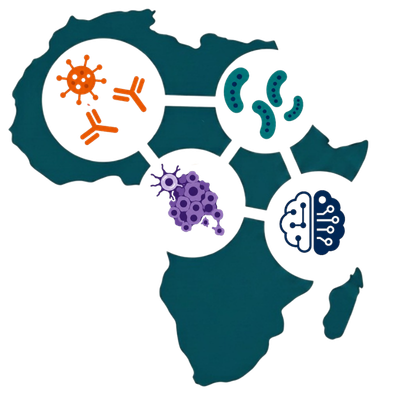
TACII unites scientists from all five African regions in a coordinated, systems-level approach to cancer research. The platform integrates three previously isolated domains: infection and immunity, the microbiome, and the tumour immune microenvironment (TIME). We aim to establish shared multi-country clinical cohorts, harmonised data systems, and accessible biospecimen platforms. This infrastructure will allow large-scale, comparative cancer research across the continent. This will include AI applications and research. TACII will generate insights relevant to both African and global cancer biology.
Our priorities
Geographic Footprint
TACII spans 11 countries across all five African regions, with institutional partners in Germany and the UK.